
The Phototransistor
A new type of electric eye

Today in 1950, Bell Telephone Laboratories announced the invention of the phototransistor, a transistor operated by light rather than electric current, invented by John Northrup Shive.
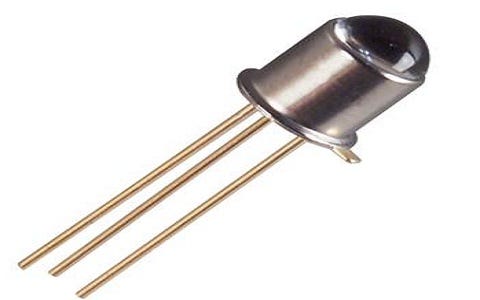
In May 1950, a Bell Labs publication described the phototransistor as:
An entirely new type of "electric eye" much smaller and sturdier than present photo-electric cells and possibly cheaper-has been invented at the Laboratories. During the past quarter century, electric eyes have found widespread use in electronics because of their ability to control electric currents by the action of light. To the layman, one type is perhaps best known for automatically opening and closing doors, but such devices have many other important uses in television, sound motion pictures, wirephotos, and still many more in industry…
Although the Phototransistor is still in the experimental stage, Laboratories scientists and engineers expect that, after the necessary development, it may have far-reaching significance in electronics and electrical communication. Just as the Transistor is not expected to supplant vacuum tubes, but rather to supplement them, so the Phototransistor is not expected to displace existing photo-electric cells. Because of their small size and expected long life, however, together with economies that might reasonably result from mass-production, Phototransistors should find many applications where it is not now practical to use present-day photoelectric devices.